Thursday, June 28, 2012

June 29, 2012 End of School Year


The school year has ended and I am thrilled to report that I have learned a great deal these past ten months.  During our Peace Corps training we were advised that it would take the first year in our sites to begin to feel comfortable, and to have a sense of how we would fit in to be of service to the Belizean people.  Most of us put that concept way back in the recesses of our minds as we jumped in with both feet in our idealistic enthusiasm, but now I appreciate the truth of that statement.  After a school year of observing children and teachers, designing lessons for children and workshops for teachers, I am finally beginning to have a sense of how I can be of more benefit to the Belizean teachers and students in the development of literacy. 

Most of the students in grades 1-3 (Infant 2-Standard 2 in Belize) who read below grade level, have difficulty because of a shaky foundation in their reading instruction.  Each case is unique, but some factors include:
  • ·         Frequent absences due to illness, lice or rain
  • ·         Frequent absences due to families moving back and forth between Belize and Honduras, Guatemala and El Salvador
  • ·         Frequent absences because parents keep students home to help take care of younger siblings
  • ·         Limited Standard English (which is the language of instruction in Belize) upon arrival to school
  • ·         Too young.  Belize allows children to begin kindergarten (called Infant I) at age 4, and the cut-off date is January.  So these children can be 4 years old during much of their kindergarten year.  Many children throughout the world are not ready to learn to read until age 5 or 6.
  • ·         Lack of preparation in oral language.  Many teachers in preschool and kindergarten dive right into teaching letters and sounds without adequately preparing the children in phonemic awareness. 
  • ·         Lack of teacher preparation.  Some teachers have at least an Associate Degree in Primary Education, but many have no preparation in child development or in the teaching of reading.  Therefore, literacy instruction is uneven throughout the schools that I have seen.  There will be one experienced, creative, energetic teacher alongside a struggling teacher.  The Ministry of Education is making great strides in preparing their teachers and requiring that all teachers be certified.
  • ·          Lack of differentiated instruction.   This means that teachers deliver instruction on only one single level, even if the children do not understand or follow the lesson.  Grouping by ability level is a new concept in Belizean education.


This year I have learned so much from the teachers, who make almost all of their own materials and have limited space in the classroom.  They care about their children’s success in literacy, but have few opportunities to learn new ideas or methods.  Therefore, they must be resourceful and creative.  I’ve learned to admire the principals, many of whom are also teaching principals, and who must spend a great deal of their time repairing copy machines and school bells, and must also raise funds for their schools.  I’ve learned a lot from the children who love any and all books that I bring to read to them or provide for them to read to me.  It was so fulfilling to see children who in September did not know the alphabet in the last few months begin to read the simple books that I brought to their classes.  This is why we become teachers!
 Samarra receives an award for improvement in reading
Some of my reading students and their teacher, Mr. Nicholas

My most exciting adventures this past month were a trip to Belize City with my colleagues from the Education Center to see the children perform in the Festival of the Arts, and a trip, also with my colleagues to the National Spelling Bee in Spanish Lookout.  Here are the photos.
Festival of the Arts
Students I work with from Light of the Valley School participating in the Festival


The National Spelling Bee
Can you guess who the sponsor is?
Caryn Cornejo, a student from Dangriga, won second place and was interviewed for Belizean TV

One Saturday a group of us Peace Corps Volunteers descended on Sandy Beach Restaurant in Hopkins, a village one hour from Dangriga.  We went to help out the women's cooperative to reconstruct a landmark in Hopkins that burned down a few years ago.  These Garifuna women are resurrecting a restaurant and resort, and our Peace Corps friend, Meghan is living in Hopkins and working with the women's cooperative to put their business back in action.  We all went to help out with some painting.  We also had the opportunity to harvest a couple of coconuts and learn about the Garifuna cuisine that the women prepare for their customers.  We learned how to prepare the plantains for "hudutu", a mashed plantain dish that goes with a delicious fish stew, called "bundiga,"  prepared with red snapper and coconut milk.
Sandy Beach Women's Cooperative preparing a Garifuna meal
Harvesting coconuts
I got one!  After chopping off the top with a machete, we stuck a straw in it and drank the sweet coconut water   Mmmmmm!
Helping to mash the plantains with mortal and pestle.  I lasted all of one minute.  It takes a lot of muscle.
A parting shot:  the view from Sandy Beach Restaurant

Monday, May 21, 2012

Workshops and Travels in Belize


This has been a month of working with kids and conducting workshops with teachers.  I had developed a routine of sorts, working specific days with my four schools, but that routine was rearranged because of invitations to conduct workshops in numerous schools to which I had not previously been assigned.  Over the last nine months I have gathered ideas and materials from various sources, mostly from Belizean teachers who are very creative in developing materials for use in their classrooms with limited teaching resources.  “Making Literacy Come Alive” was the title of one of my workshops, a make-it-take-it session in which teachers brought paper, cardboard, glue, markers and scissors and made interactive materials for use in their classrooms.  We focused on reading instruction theory for half of the workshop, and then developed handmade materials during the remainder of the session.
 Make-it-take-it workshops

I have also continued with the family literacy workshops at Bella Vista, working with mostly monolingual Spanish-speaking parents to increase their knowledge of early child development and preparation for school.  Some of the mothers are Maya, but they are all fluent in English.   In one of the women’s favorite sessions, we made sock puppets for them to use with their children.

Since my last blog post I have had opportunities to spend two weekends at a couple of areas in Belize that were new to me.  In April I stayed with friends at Monkey Bay Wildlife Sanctuary.  We floated along on a canoe tour down the Sibun River with a guide who spotted more birds, iguanas and mammals than I would have ever managed to see on my own. 


 Katrin O'Leary, Barbara Levy, me and Linda Manning swimming in the Sibun River
Spiny iguana
The Great Kiskadee, Belize's Flycatcher

On May 18 I traveled to the southern-most district in Belize, Toledo, for the annual Cacao Fest.  This region is fast becoming a major cacao growing region and many of the cacao growers and chocolate business owners used this occasion to showcase their products.  On the evening of the 18th a number of us Peace Corps Volunteers lent our services as waiters and waitresses and food preparers at a Wine and Chocolate dinner at Coral House Inn.  Fortunately, the hours we worked paid off with tastes of luscious chocolate, wine and Belizean food.  As you can see from the photos, we were amply rewarded.

Peace Corps Volunteers serving at the Wine and Chocolate Night
Maya women make corn tortillas on the comal for the Wine and Chocolate Night
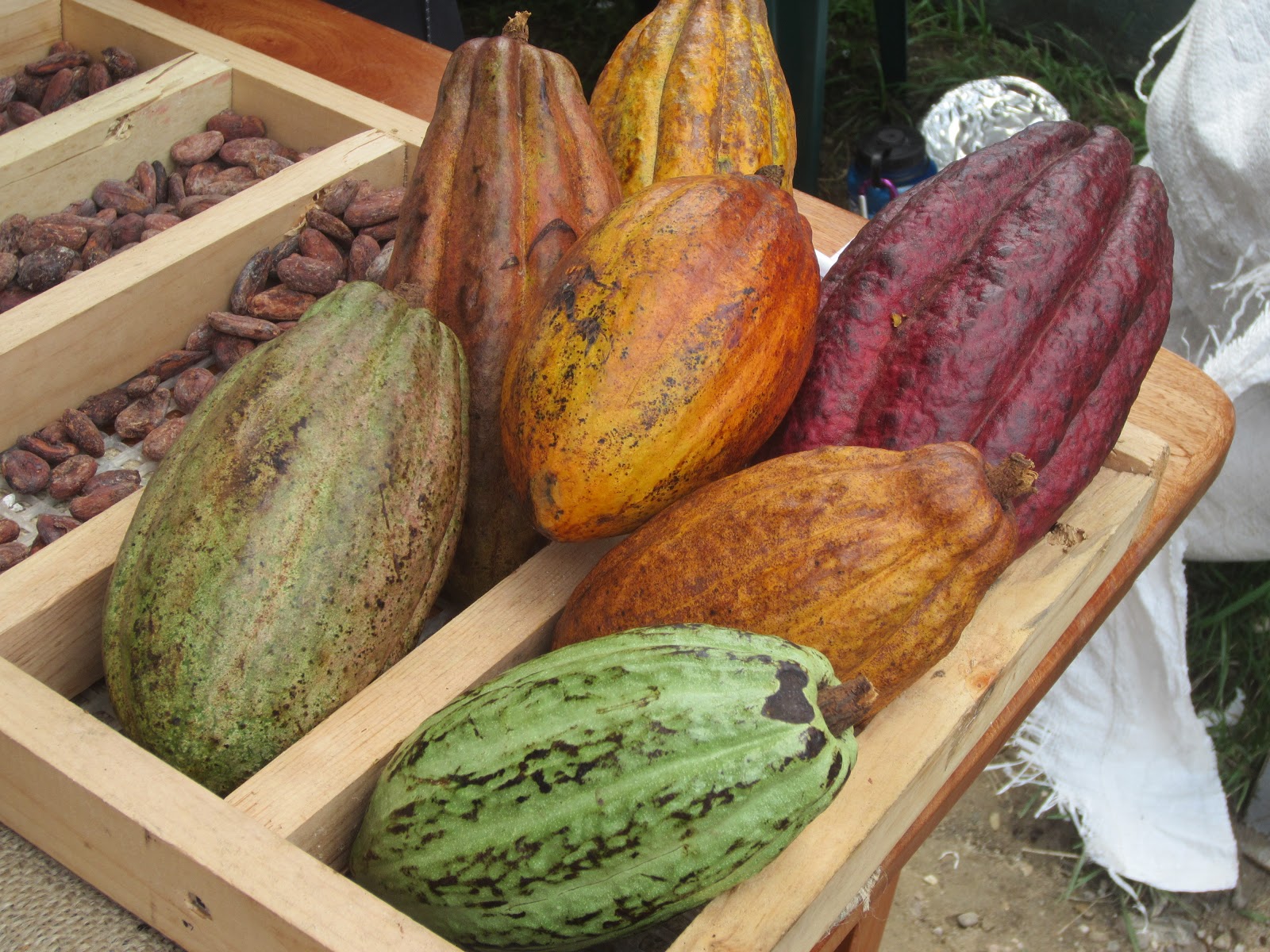
Roasted cacao seeds on the left, cacao pods on the right
Peace Corps Volunteer Melissa Ng showing her project helping to establish a cacao museum in Punta Gorda
Peace Corps Volunteer, Megan Wiseman, who works with Belize Rural Finance Programme training young entrepeneurs
Maya musicians playing the marimba
Creole singer
Barbara, me and Katrin in Punta Gorda
The following day we were treated to a lovely day strolling around the town, enjoying the Cacao Fest, a kind of fair on the streets of Punta Gorda.  We wandered through booths with Maya handicrafts, jewelry, chocolate concoctions, advertisements for NGOs that assist with rural development, and even a booth sponsored by Belikin, the national beer of Belize, that sold chocolate stout just for the occasion. We listened to music from various cultural groups in Belize:  Maya marimba music, Garifuna  and Creole drums, Belizean punta rock.  We visited Cotton Tree Chocolate Factory and learned about the manufacturing of chocolate.   It was a delicious weekend!
My favorite tree in Belize:  the flamboyant
My favorite sunrise in Belize

Sunday, April 15, 2012

One Year Anniversary in Belize


My first year in the Peace Corps has been a year of tremendous personal growth for me.  Yes, it has been a year since I arrived in Belize.  Our 2011 group of 35 Peace Corps Volunteers celebrated our one year anniversary on March 24.  There were days during this past year when I felt that time was moving so slowly, that it had almost stopped;  when I felt boredom or loneliness or homesickness that threatened to send me running back to the United States.  But surviving those difficult times and immerging on the other side has made me stronger, and as I begin my second year here, I am beginning to feel that I am actually helping a few teachers and kids.  Teachers are beginning to ask me for help and suggestions, and principals are requesting that I facilitate workshops for their teachers.  It has taken a long time to establish rapport in the schools and I have enjoyed getting to know the teachers and the children in their classes.  I find myself applying ideas and methods that I learned as a young teacher so many years ago, and adapting games and techniques that I used when teaching homeschoolers.  It feels like so many of my previous experiences as a teacher, a mother and a human being are all coming together for me to draw upon for my work and my life here in Belize.  I sometimes consider myself the luckiest Peace Corps Volunteer in the world.
 Leading a workshop on teaching reading for the teachers of Stann Creek District

The past two weeks have been Easter Vacation and school has been closed.   I feel refreshed and reinvigorated to begin my work again with teachers and students here in Belize.  The first week of vacation I spent with two of my wonderful Peace Corps Volunteer friends, Kathryn O’Leary and Barbara Levy.  They traveled from their sites to stay with me for a few days and we planned workshops together.  We also took the opportunity to swim in the Sea and hike the trails of Cockscomb Nature Preserve.  It was marvelous to share ideas and inspiration with two experienced teachers who work in the same area of literacy as I do. 


During the second week of Easter Vacation my sister-in-law, Lynn Bryant, came to enjoy her own Belize adventure here with me.  As soon as she arrived, we took a water taxi out to Caye Caulker, and spent Easter weekend there with many other Belizeans escaping the heat and enjoying the sea breezes.  We feasted on fresh grilled fish and snorkeled in the Barrier Reef.
Lynn and I ate grilled hogfish

Lynn experienced the real Belize while bouncing along the Western and Hummingbird Highways in the hot, crowded bus for three hours on our way from Belize City to Dangriga.  We spent a few days in my little town and swam in the Sea at the Pelican. 
Relaxing at the Pelican

Then we ventured to the Cayo District to an Eco Lodge so that Lynn could experience the jungle of Belize.  We went on a night-time nature walk and saw scorpions, tarantulas, a fox, opossum and a bird called the blue-crowned mot mot.    We took an early morning bird-watching walk and saw two kinds of toucans, woodpeckers, owls and many other birds indigenous to Belize.  We also visited a butterfly farm and saw all the stages of the Blue Morpho butterfly, the national butterfly of Belize. 
The  Blue Morpho butterfly

These past two weeks with my fellow Peace Corps Volunteers and my beloved sister-in-law have renewed my energy and inspired me to continue my work here in Belize.

Sunday, March 4, 2012


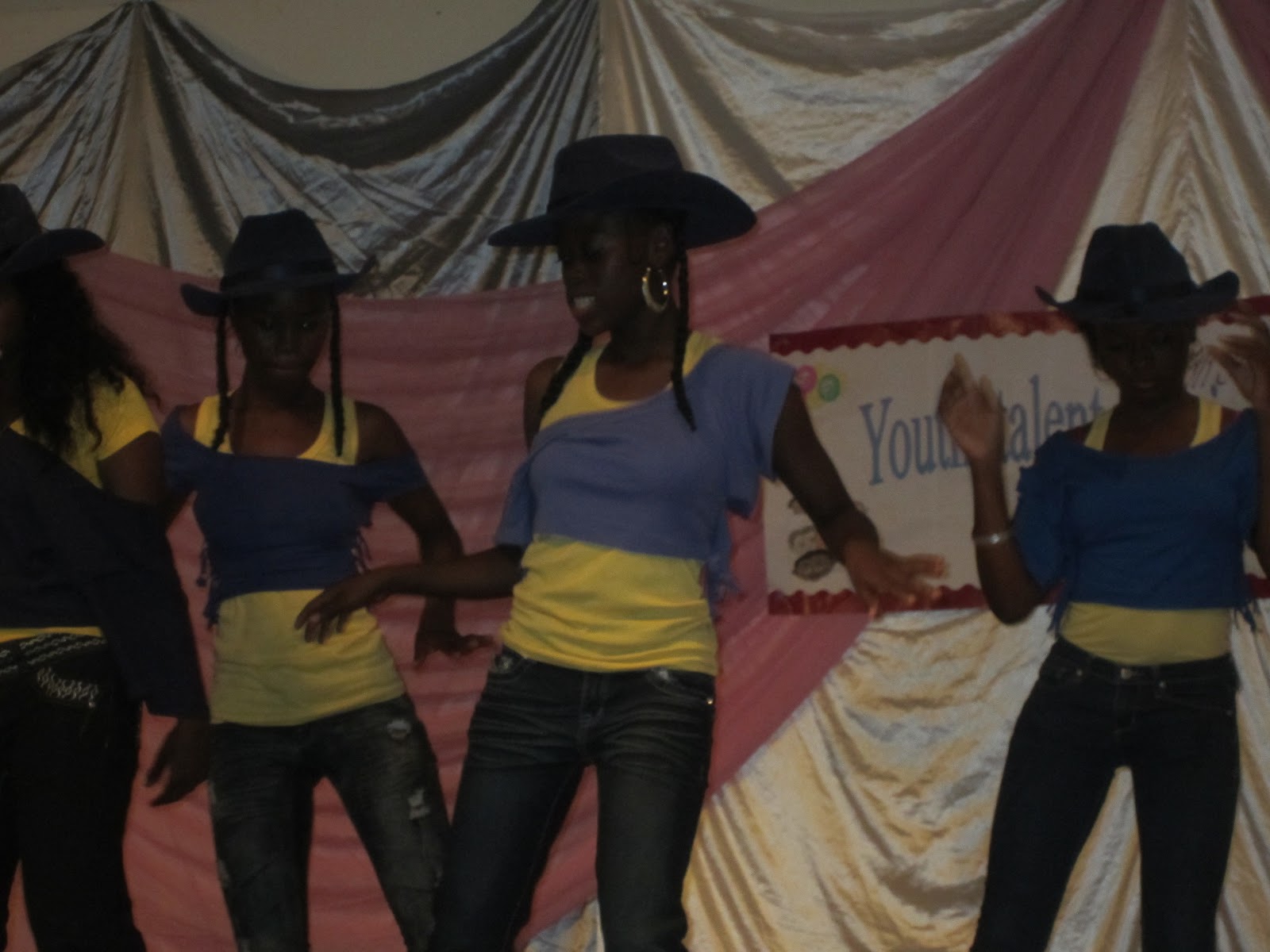
February was for me a month of relatively consistent work in the schools with only a few interruptions to my schedule.  Interruptions are actually quite common here in Belize.  It seems there are frequent fairs, fund-raising events, parades, festivals, contests or teachers gone from classes due to workshops or retreats.  But this past month I only really experienced two interruptions to my regularly scheduled sessions with students and teachers.  One was a spelling bee which I was asked to help judge, and another was a Festival of the Arts for high schoolers which I was asked to help decorate and run.  The spelling bee was held in several locations throughout the Stann Creek District, to determine the winner who would then compete in April in order to be the representative of the Stann Creek District overall in the national spelling bee held in Belize City.  The Festival of the Arts is also an elimination contest to determine the best in the Stann Creek District who will eventually complete in the national festival in June.  What a privilege it as for me to be not only an observer of the Belizean students’ talent, but also an active participant in organizing these contests.  Here are some photos of a few high school performers. 
High School students dancing the traditional Garifuna dance, Jankunu
Belizean rappers
Traditional Garifuna dance
The winning dance competitors
As I continue to work with small groups of students, teaching them how to read, and as I attempt to give teachers ideas for working with these underachieving students, we are all beginning to see some progress in their development.  As the teachers notice their students’ progress in reading and their developing confidence, they are encouraged to work with these small groups of students on a regular basis.  The traditional mode of instruction in Belize has always been whole-class, regardless of whether or not individual students are progressing, so the notion of working with small groups (known as differentiating instruction in educational parlance) is a relatively new concept.  It is also very difficult to implement in the schools, because there is little physical space inside the classroom to group students according to ability level.  I have taken to pulling small groups of kids outside to work a half hour at a time, or to working with teachers before or after school with these small groups.  We have seen the students progress in their reading abilities just since November.  That is very encouraging to teachers.

Teaching a small group of Standard I (second grade) students at Light of the Valley Primary School

Every Wednesday I also continue with the Family Literacy workshops in the Spanish-speaking village of Bella Vista.  Two of the mothers have learned to write their own names for the first time and are beginning to learn to read in Spanish.  I love working with these women, who dutifully complete their homework and show up each week eager to become literate.

On Saturday, March 3rd I did some hiking with two friends, Eva and Linda at the Cockscomb Basin Wildlife Sanctuary and Jaguar Preserve.  This unique sanctuary in southern Belize covers an area of about 150 square miles of tropical forest, and is the world's only jaguar preserve.  The jaguar is largely a solitary, opportunistic, stalk-and-ambush predator at the top of the food chain (an apex predator) and it is a keystone species, playing an important role in stabilizing ecosystems and regulating the populations of the animals it hunts.   Belize declared the Cockscomb Basin Wildlife Sanctuary a preserve in 1984, and the jaguars within its boundaries have been protected ever since.  We did not encounter any jaguars, since they are nocturnal.  We did, however,  glimpse a grey fox, a jaguarundi, a guinea fowl and two snakes.

 
After a rather strenuous climb, we were rewarded with two waterfalls and a pool of water in which to cool ourselves off.  We were also treated to a view of the Cockscomb Mountain Range, and Victoria Peak, the second highest mountain in Belize, at 3,688 ft.  I am so blessed to be able to witness this tropical, Central American beauty.
along the trail
Victoria Peak