Friday, September 23, 2011

SEPTEMBER--A MONTH OF NATIONAL HOLIDAYS

September is the month of national holidays in Belize.  The very first weekend was Carnival.  When all of you in the States were celebrating Labor Day, I was standing in sweltering heat enjoying the dancing, costumes and LOUD music of the annual Carnival parade in Belize City.  This is the big kick-off to an entire month of patriotic holidays.  I’ll let my photos do the talking for me.


September 10 was the Battle of St. George’s Caye Day.  This battle was a short military engagement that lasted from September 3 to 10, 1798, off the coast of what is now Belize.  However, the name is typically reserved for the final battle that occurred on September 10. The battle took place between an invading force from Mexico, attempting to claim Belize for Spain, and a small force of resident woodcutters called Baymen, who fought for their livelihood assisted by black slaves. After the final two and a half hour battle, ravaged by sickness, the Spaniards withdrew and the British declared themselves winners.  On this day politicians deliver speeches, mainly in Belize City. 

However, I was not there to hear the speeches, as I was in the district of Cayo in a nature preserve where I was fortunate to see two of Belize’s national symbols in the wild.  In every classroom in Belize, teachers display the five national symbols:  the tapir, the black orchid, the keel-billed toucan, the mahogany tree and the flag.  Here are photos of the black orchid and the toucan.  I have also included the national butterfly, the blue morpho, although it is not one of the symbols.


The blue morpho butterfly
The keel-billed toucan
The black orchid

The most important national holiday in the month of September is Independence Day, on September 21.  This year’s celebration was especially significant as it was the thirtieth anniversary of Belize’s independence from Great Britain. This year’s celebration was bittersweet for Belizeans, though, because the “Father of the Nation”, the Right Honorable George Price, the country’s first Prime Minister and architect of Belize’s independence, passed away just two days before Independence Day. 

Several older Belizean friends have recounted their memories of the grand celebrations that took place back in 1981.  My friend and colleague, Therese Ariola, recalls the first Independence Day “bashmen” (Kriol for “party” or "celebration").  She described for me her excitement as a young student in the Teacher’s College of Belize City at the prospect of her country’s transformation from the colony of British Honduras to the independent nation of Belize.  She also recalls her fear during the riots, when opponents of Independence fought against their fellow countrymen.  

My host “mom”, Miss Cas, recalls memories of George Price’s stirring speeches heard on family radios that rallied the new nation to separate from their colonial masters.  She was the mother of young children at that time, and remembers the fireworks and celebrations in the streets.

On September 21st 2011, I had the privilege of participating in the Independence Day parade through the streets of Dangriga.  The Ministry of Education office where I am based decorated a “float”, actually a cattle car pulled by a semi-truck.  We put up dozens of Belizean flags, balloons and colored fabric, along with banners identifying our float.   We snaked around the streets of Dangriga at an excruciatingly slow pace, while blasting the Belizean punta rock song “I am Belize” from the gigantic speakers on the “float”.  In spite of the oppressive 90 degree heat and the three hour duration of the parade, we had a lot of fun tossing lollipops to the children along the parade route.  And I felt honored to be asked to participate in this momentous occasion.
Yours Truly on the float with some young Belizean friends

The Belizean flag

My friend Therese Ariola

I wish you all a lovely Autumn!  Please keep in contact.   I love to hear from folks back home.
Ava

Monday, September 5, 2011

More workshops, another camp and an adventure weekend


August 2011

Preschool teachers are an especially creative and lively bunch, which made my experience with them in workshops in August particularly rewarding.  Preschool is a vitally important step toward progress in literacy in Belize, especially because most children begin primary school unable to speak English.  Many have learned Spanish, Garifuna, Qe’qchi or Kriol at the parents’ knee, but the official language of instruction in Belizean schools is Standard English.  So if students have the benefit of beginning preschool at age three, they will be exposed to the language which they are expected to learn to read and write.  However, there are only 32 preschools in the Stann Creek District, and not all of them are free of charge.  In the entire country of Belize only 43.7% of children attend preschools.

I was privileged to be asked to help out with the preschool teachers’ workshops, even though my primary project focuses on elementary schools.  We are encouraged, however, to develop secondary projects.   My favorite workshop with the preschool teachers was a practical one:   reading aloud to children, something near and dear to my heart.  After modeling for them, and providing tips, each teacher demonstrated for us.  They were such hams! 
Every afternoon during the week of workshops, the teachers participated in make-it-take-it workshops and inspired each other to develop their own charts, games and visuals for use in their classrooms with shoestring-budget materials. Teachers in Belize are not given money for use in their classrooms, so they are extremely resourceful at using whatever they have available to them to make their own charts, books, games and learning centers.


The following week I had the opportunity to work with the public librarian in developing a “camp” for children to attend.  The theme was “seeds, plants and healthy eating habits”.  Each child planted radish seeds in little plastic cups and in the two weeks of the camp, they saw shoots come up through the soil.  I played my guitar, taught songs and games, told stories and read aloud to 20 enthusiastic youngsters.  Two of my Peace Corps Volunteer friends helped on a couple of days.  Kirstin and Cathy are both volunteers in the health sector, so they conducted two creative activities on healthy eating habits that the kids enjoyed very much.  We took a field trip to the local open-air market and the children were given money to purchase fruits and vegetables.

On one special weekend in August, a couple of new friends, Holger and Kerstin, arranged for us to stay at Ian Anderson's Caves Branch Jungle Adventure Lodge.  Holger is a volunteer consultant with the Belize tourism industry, and his wife, Kerstin, is volunteering with the Red Cross.  They invited my friend Linda and me to attempt three adventures, and I am astounded that I actually had the courage to attempt all three.  And surprised and thankful that I actually survived!  The first was called “The Black Hole Drop,” a 300-ft. repelling adventure into a sinkhole in the middle of the jungle.  Our guides reassured us of their experience and emphasized their record of safety, so we timidly leaned back and repelled off the precipice down into the cavern, where the other guides had gone before us and prepared a delicious lunch. 


Our next day’s adventure was a seven-kilometer river trip in and out of caves, while floating on inner tubes.  We paddled down the river using our arms as oars, so it was quite a workout, but the water was cool and refreshing and the caves so impressive, that we didn’t even notice the burn in our muscles.  At the end of the 3-hour journey, a huge buffet lunch awaited us.


Following our repast, we were hurled through the rainforest on ziplines.  The zipline adventure was a hoot and not at all scary; just a whole lot of fun.  I feel so thankful to have these opportunities on weekends.  I am the luckiest Peace Corps Volunteer ever!


Monday, August 8, 2011

Homesickness, Camps and August Workshops

Every Peace Corps Volunteer experiences homesickness at one time or another, but I was foolish enough to believe that I would be immune to that particular malady.  When I was much younger and was an exchange student in Costa Rica and then in Mexico City, I did not experience homesickness--not even once--so I did not recognize that black cloud when it descended upon me here in Belize.  It felt at times as if I were mourning the death of someone dear to me.  It was a physical pain in the pit of my stomach that caught me off guard at the most random moments.  Tears dribbled out of my eyes and I was powerless to hold them back. 

Today, as I write this, those inexplicable feelings are no longer plaguing me, but when they return, at least I will not be broadsided and perplexed.  I dealt with those uncomfortable feelings in various ways, and some of my methods were actually successful--temporarily.  I called, texted and emailed family in the States or I contacted Peace Corps friends here in country.  That was a temporary salve.  I walked, rode my bike and did my zumba exercise, and all those physical activities were exceptionally helpful in transforming my melancholy, although it slithered back into my thoughts as soon as I sat somewhere alone for more than five minutes.  I wrote in a journal, which gave me some perspective, at least on an intellectual level, even if the heavy feeling in my body continued to overwhelm me at times.  I finally kicked the blues away after spending lots of time with Peace Corps Volunteers who have been here in Belize for at least a year.  Their empathy and patience helped me to begin to feel normal again.  But “normal” is a little different from the “normal” I brought with me to Belize.  I feel myself changing.  Perhaps that is what is meant by adjusting.  I am just beginning to connect with some of my Belizean colleagues and acquaintances, and that is helping to transform those inexplicable pangs of sadness.   I am also spending more time engrossed in good novels and even movies that we Peace Corps Volunteers pass around on DVDs.  I am sure those uncomfortable waves of ennui will return in future episodes, but I will have more weapons in my arsenal to fend them off.

Although the Peace Corps does not allow us newbies to spend the night away from our site for the first two months, because of work obligations, I was given permission to spend some nights away.  This change of scenery probably contributed to the dissipation of my homesickness.  Also, I stayed at the homes of two experienced Peace Corps Volunteers whose recounted experiences provided me with a wider perspective and gave me hope.  My work with the Ministry of Education took me to Belize City for two days and nights to attend workshops to instruct me in the manner in which the Ministry expects us literacy Volunteers to train teachers in our sites.  The workshops were excruciatingly long, but valuable.  I spent two days with bright, committed Belizean teachers who were also being trained to mentor their colleagues.


A day later, I traveled with my Peace Corps friend Barbara to a small camp outside of San Ignacio to participate in Camp GLOW (Girls Leading Our World).  The camp was organized by a committee of Peace Corps Volunteers who had been planning this camp for over 11 months.  There were 20 girl campers, most of whom had never spent a night away from home.  They hailed from two different regions of the country, so it was a marvelous experience for the girls to make friends with girls from different cultures.  Barbara and I led the campfire songs and assisted the other counselors with games and activities. We even ate smores!  I look forward to participating in the planning of Camp GLOW for next summer, and I hope to start a GLOW club in Dangriga.

Camp GLOW
Learning to dance at Camp GLOW
Barbara and I led the campfire songs


After helping out at that camp, Barbara and I traveled to Georgeville, a small village where another Peace Corps Volunteer, Jenna, was conducting a Reading Camp.  We also helped Jenna with singing and games.  I came away from Jenna’s camp with ideas that I hope to use this coming school year either in classes, or in summer camps

At Jenna's reading camp
Fun games at Jenna's camp

I was grateful to have the opportunity this month to be invited by my fellow Peace Corps Volunteers, Cathy and Steve to help with their projects.  I facilitated a workshop with a group of dynamic and involved community women, POWA (Productive Organization of Women in Action) on Non-formal Education.  They are being trained to work in the community promoting literacy.

Workshop with the POWA women on Non-formal Education

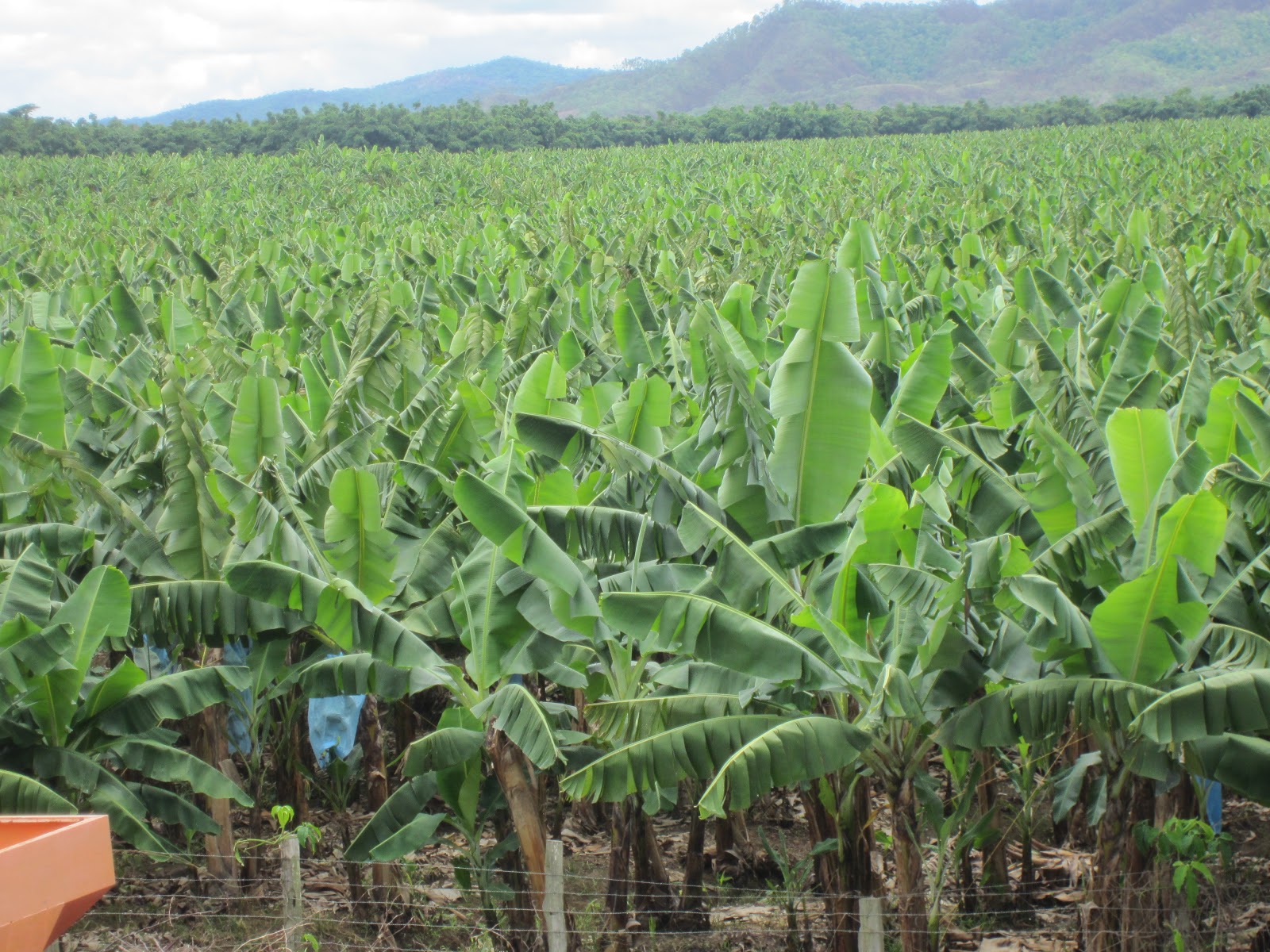
On one Sunday Cathy and Steve invited me to go with Steve's counterpart and a nurse from the Dangriga hospital out to a banana farm about an hour from Dangriga.  Our goal was to measure blood pressure and blood sugar levels in the Spanish-speaking migrant workers and their families.  They had asked me to go along to translate.  It was wonderful to be able to use my Spanish.
The banana farm

During the first two weeks of August teachers throughout Belize are required to attend workshops in order to maintain their licenses.  In our town of Dangriga we have been conducting workshops in the rooms of Ecumenical College for all the teachers of the Stann Creek District.  I was asked to facilitate a workshop for primary school teachers on teaching the writing process.  From feedback that I received, it seems that the workshop was practical and helpful for them, and I truly enjoyed interacting with an enthusiastic and committed group of primary school teachers.

This week I am helping out another of my colleagues here in the Education Ministry.  Therese, the Preschool Coordinator, has been so warm and friendly to me since I arrived in June, and she asked me to help facilitate workshops all week with 26 of the preschool teachers from the Stann Creek District.  I conducted a short workshop on reading aloud to children, and will do another one on storytelling tips and techniques.  Next on the agenda is a two-week “camp” at the public library.  I’ll report on that in the next installment of this blog.

I hope all my friends and loved ones are surviving the heat of this year’s summer in the US, and that you’ll continue to write to me and keep me in your thoughts…

Tuesday, July 19, 2011

How did you spend your Fourth of July?  Since it is not a holiday in Belize, I worked all day at the Education Center, as usual.  In the evening, however, I was able to watch celebrations of American Independence Day on the TV at home.  As I watched “A Capitol Fourth” on PBS, my heart swelled with a kind of pride that can only be described as patriotism.  I invited my host “mom” Miss Cas to watch with me, so together we listened while the Washington Symphony Orchestra played the 1812 Overture and fireworks exploded over the Capitol Building, the Washington Monument and the Lincoln Memorial.  She told me that two of her children and two sons-in-law have served in the US military.  She shared her experience of visiting the Pentagon, and proudly stated that her son even fought in Iraq.  We shared a very special moment together.
Mrs. Linda Castillo (Miss Cas) and grandkids in front of their home
Shermar, Jemeiah and Miss Cas
My host family

From July 11-15 one of my fellow Peace Corps Volunteers, DeShawna Porter, and I helped to organize a day camp at the Stann Creek District Ministry of Education Center.  The three truancy officers at the Education Center asked for our assistance and worked with us to bring the camp to life.   In the morning session there were from 30 to 35 children, ages 5-9.  Each day we had no idea how many students would actually show up.  In the afternoon we hosted from 10 to 15 older children, ages 10-13.  Our goal was to provide activities that would help to develop academic skills without repeating the same old “chalk and talk” that students would have experienced in the classroom during the school year.  We taught the children new songs, played academic games, told stories, read books, wrote stories, created arts and crafts and played games and sports outside.  It was exhausting, and more than a little challenging.  The kids attend different schools around Dangriga, so they are accustomed to differing forms of classroom management, and we had to establish our routines and rules in a short amount of time.  We also had no money to spend on materials, so we had to be creative with whatever we could find in the Ed Center to make crafts.  But all in all the children enjoyed themselves, and the parents appeared to be grateful that their children were provided with structured activities to keep them busy during the summer. 

DeShawna Porter playing basketball with the older camp kids
Angelita, the truancy officer, leading the kids in a game of "What time is it, Mr. Wolf?"
How many kids can we fit on a see-saw?
Miss Cas' grandkids, Jemeiah and Shemar, attended camp

Recently I purchased a bicycle, which has transformed my life.  It takes so little time now to get around Dangriga, and getting back and forth from work is so much more pleasant.  On Sunday, I went with my fellow Peace Corps Volunteers, Cathy, Steve and Meghan on a long bike ride to explore Dangriga, but Meghan’s bike chain broke.  While serving in the Peace Corps, we must learn new skills like changing a bike chain and keeping a bike in working condition.
How many PCVs does it take to change a bike chain?
Cathy, Steve and Meghan

Besides lots of bike riding and walking, I have also begun another form of exercise:  zumba.  Every Tuesday and Thursday evening, Cathy, who was a fitness instructor back in the States, conducts a zumba class at the Alejo Beni park.  She teaches us aerobic dances to Latin beats, Bollywood hits, hip hop and Belizean punta rock.    It’s a helluva lot of fun for an activity that is so exhausting, but as you can see from the photos, the setting is magnificent.  We are on the stage right at the seaside, with the sea breezes cooling us as we sweat.  The Belizean women who have joined us are really enjoying this form of exercise, and we’re making new friends along the way.
Zumba class at Alejo Beni park
Caribbean Sea is on the right

This week I’m back in the office planning workshops and more camps.  I will help facilitate a workshop on nonformal education for a women’s group called POWA (Productive Organization of Women in Action) who will soon begin training their fellow Belizeans in Family Literacy.  I will also attend a two day in-service training in Belize City developed by the Ministry of Education’s Literacy Unit, in order to be able to conduct workshops in August with teachers in the Stann Creek District.  Next week I will help fellow Peace Corps Volunteers in other parts of Belize with day camps and one sleep-away camp for GLOW (Girls Leading Our World) clubs.  I have a lot of work ahead of me, and plenty to look forward to.  I hope the summer is going well for all of my loved ones back in the States. 
 Relaxing in the hammocks at the Pelican on a Sunday afternoon

Friday, July 1, 2011

Life in Dangriga


Four weeks have passed since we officially became Peace Corps Volunteers and now we are all acclimating to our new sites.  Let me tell you a little about my town, Dangriga.  It was formerly known as Stann Creek Town, and was settled around 1832 by Garifuna people (Black Caribs, as they were known to the British) who were exiled from their home on the island of St. Vincent, settled in Honduras and later moved to a few locations along the coast of Belize.  Since the early 1980s Garífuna culture has undergone a revival, and the town was renamed Dangriga, a Garífuna word meaning "sweet waters".  The Stann Creek River runs through the town and empties into the Caribbean Sea.  I have walked many times along the beautiful seacoast.  


The Lonely Planet travel guide writes that the town of Dangriga has “a funky vibe about it – tumbledown and mildly untidy – and for this reason it isn’t a major stopover point for most tourists.”  The town has around 10,000 inhabitants, but has the feel of a small village.  As I walk from home to the office every day with one of my colleagues, Miss Therese, we greet every passerby.  She has taught me the Belizean standard of etiquette, which requires that we “bid the time of day” to everyone.  Belizeans, especially in Dangriga, are very friendly and really look you in the eye when you greet them.  I have even learned to say good morning in Garifuna:  Buiti binafi.  The faces of the elderly Garifuna women returning home from morning mass light up when they hear that greeting.  I have also learned that from noon to 3:00 pm you must say “good afternoon”, from 3:00-6:00 pm you say “good evening”, and after 6:00 pm the greeting is “good night,” even if you are saying hello to someone.
     The main street of Dangriga
The monument, Drums of our Fathers, at the entrance of town

There are eight primary schools in town, 2 high schools and a junior college.  There is a small hospital and a clinic, and a fairly large outdoor market place, mostly run by Guatemalans, where one can buy fruits and vegetables.  There are many small grocery stores, mostly owned by Chinese immigrants, and several furniture, clothing and household goods stores, mostly owned by Lebanese and East Indians.  Dangriga is quite a cultural melting pot, and it is the spiritual heart of the Garifuna people (the Garinagu) in Belize.  

During the summer, since school is out, I am working 8-5 at the Ministry of Education Center, which is just 100 feet from the seaside.  As I complete research on and prepare for upcoming workshops for teachers, and prepare for upcoming summer camps, I am lulled by the sound of the waves, and cooled by the sea breezes flowing through the open windows.  I am indeed fortunate to have been placed here.

During training, Peace Corps trainers advised us that our first few months would be slow and feel rather unproductive to us Americans, who are used to a fast-paced lifestyle.  We were encouraged to spend our first months listening, getting to know our new home, co-workers, and new culture, before jumping into any major projects.  Some of my Peace Corps colleagues who are involved in Business Organization and Development were thrown headlong into projects right away, but those of us in Education are still floundering a bit.  Expectations and job descriptions are not delineated as clearly as they might have been in our former lives back in the States, so as Peace Corps Volunteers (PCVs), we are called on to be flexible and adapt to the schedules of our Belizean counterparts.   

My first week in Dangriga I had the opportunity to visit one of the five schools that I will be assigned to when school starts up again next September.  The school is an hour and a half away in a little village called Bella Vista.  There are 1,000 students, Infant I through Standard 6 (K-8th grade), and the majority of students enter school speaking very little English.  Their parents are mostly Spanish-speaking workers on the banana farms surrounding the village.  The three vice principals explained that some teachers at the school have very little training and need some mentoring, especially in teaching language arts.  I really look forward to working with teachers and students in September.

At that time I will also be assigned to four other schools, but I was not able to visit them yet, since school let out for the summer.  Two of the schools are here in Dangriga, but the other two will require bus rides (mornings at 6:00 am!!).  In the meantime, I have had the privilege of attending a couple of end-of-the-year celebrations, one at a fascinating school here in Dangriga, The Gulisi Community School.  The teachers there are all Garifuna, and speak both English and Garifuna to the students.  The school is attached to the only Garifuna museum in Belize, and one of their goals is the maintenance of Garifuna language and culture.  I attended the preschool “Stepping Up Ceremony”, a kind of graduation to primary school.  20 adorable little 5-year-olds were decked out in their finest Garifuna dress as they recited poems and songs in Garifuna and English.  When they approached the principal to receive their “diplomas” they had changed into costumes of professions they hope to be when they grow up.  Miniature doctors, nurses, army generals, lawyers and teachers proudly carried their certificates back to their mothers and fathers.  The banner flying behind them read:  “Stepping up today.  Encouraging the leaders of tomorrow.”  

 Graduates of Gulisis Community Preschool singing in Garifuna

Another celebration I attended was the dissemination of certificates to the students in the two southern districts of Stann Creek and Toledo who achieved the highest scores on the PSE, the Primary School Examination.  This is the comprehensive exam given at the end of Standard 6, the equivalent of eighth grade in the US.  The mayors of both Dangriga and Punta Gorda were in attendance, as well as Education Ministry officials from both districts. These students will continue on to high school, which is not compulsory here in Belize; school is only compulsory up to the age of 14.  High school is not free, and many students, even if they pass the PSE cannot afford to attend.  There are many obstacles to completing a secondary education here in Belize.  
 The mayor of Dangriga awarding certificates to the highest scoring pupils of Stann Creek District

Over the last couple of Saturdays I was fortunate to be able to visit two lovely places.  I took a water taxi from Belize City to Caye Caulker with my PCV friend Linda.  The Cayes (pronounced “keys”) are islands in the barrier reef that are very popular with tourists.  We enjoyed swimming in the warm Caribbean Sea while listening to reggae music blaring from the outdoor bars.   
 Caye Caulker

The following Saturday I set out for the village of Independence to meet with another PCV, whose name is KC, and who has been serving here in Belize for over a year.  We took the water taxi (called the “Hokie Pokie”) over to the peninsula of Placencia, where the nicest beaches in Belize can be found.  We were there for Lobsterfest, a yearly celebration of lobster season.  I feel very fortunate to have the opportunity to make these day trips by bus to such beautiful destinations.
 Placencia

But even in Dangriga there is a peaceful beach at the northern end of the town, at a small locally-owned resort called The Pelican.  The owners are Belizeans who are very civic-minded, contributing much to their hometown of Dangriga, and are exceptionally kind to us Peace Corps Volunteers as well.  They have invited us to use their beach any time we like.  It is quiet and peaceful, with a small dock and hammocks hung under a little thatch hut.  If any of you reading this come to visit, you can enjoy Belize’s beauty along with me. You would also enjoy the warm and welcoming people of Dangriga.
 The hammocks at the Pelican
The most common form of transportation in Belize